Next generation customer service AI solutions are changing enterprise CX by moving support from simple answers to real task execution. They can now read intent, pull context from enterprise knowledge and complete actions across systems. This helps to cut wait time and reduce repeat handoffs.
Why CX Is Changing
Enterprises no longer need artificial intelligence that only replies with prerecorded messages. They need customer service AI solutions that can-
- Solve issues
- Route edge cases
- Keep every interaction consistent across chat, email and voice
This shift matters because customers expect speed from your end.But they also expect accuracy and context. A system that knows the history behind a query creates a smoother service path and fewer repeated explanations.
From Chat to Action
Basic chatbots focus on answering common questions. Newer customer service AI solutions go further by using NLP, knowledge retrieval, and confidence checks to decide whether to answer or escalate.
That five-step flow matters in enterprise support because the AI is not guessing. It uses grounded information, then either resolves the issue or hands off the case with context intact.
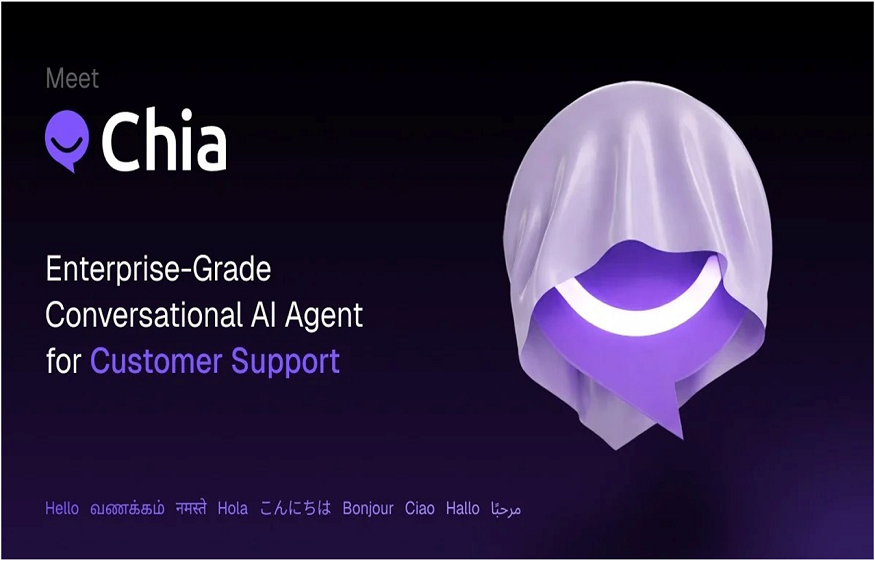
Conversation AI systems like Chia clearly show this direction, turning plain language into multi-step workflows and enabling updates to systems, blocking cards,and raising replacement requests.
Read More: How RF Grid Testing Determines Whether Your Public Safety DAS Will Pass Inspection
Enterprise Impact
The strongest value comes from faster resolution and lower manual load. Enterprise conversational AI is now here to build complex support interactions, with no-code workflow design and visible audit trails for each action.
That means CX teams spend less time on repetitive requests and more time on exceptions that need judgment. The result is cleaner service operations, faster response times, and better use of human agents.
It also helps enterprises maintain a single service standard across channels. That matters when customers move from a website to a support ticket or a messaging app without wanting to start over.
What Works Best
The best customer service AI solutions share a few traits. They rely on robust knowledge bases, clear escalation rules, and direct integration with help desks, CRMs, and internal systems.
They also need guardrails. Good enterprise AI should stay within approved workflows, log every action, and avoid making unsupported claims. That balance keeps automation useful without making it risky.
For enterprises, the real win is not just automation. It is a service that feels faster, more accurate, and less repetitive for both customers and support teams.
Read More: How ERP Helps Cement Manufacturers Take Control of Material Planning
CX Direction Ahead
Customer service AI solutions are moving from passive assistants to active operators. That change is redefining enterprise CX by turning support into a more immediate, context-aware, and measurable function.
The next stage is not about replacing people. It is about giving teams better tools so customers get answers, actions, and escalation in one flow.
Conclusion
Enterprise AI adoption is moving from experimentation into operational deployment. Businesses now evaluate AI platforms based on integration capability, data governance, multilingual support, workflow execution, and measurable CX impact.
The next phase will likely center on proactive support. AI systems will identify issues before customers report them, automatically recommend actions, and reduce friction throughout the service lifecycle.
Customer expectations will continue changing. Support teams that rely entirely on manual workflows may struggle to maintain speed and consistency. AI-driven service infrastructure enables enterprises to scale more effectively while meeting growing customer demand without compromising service quality.