
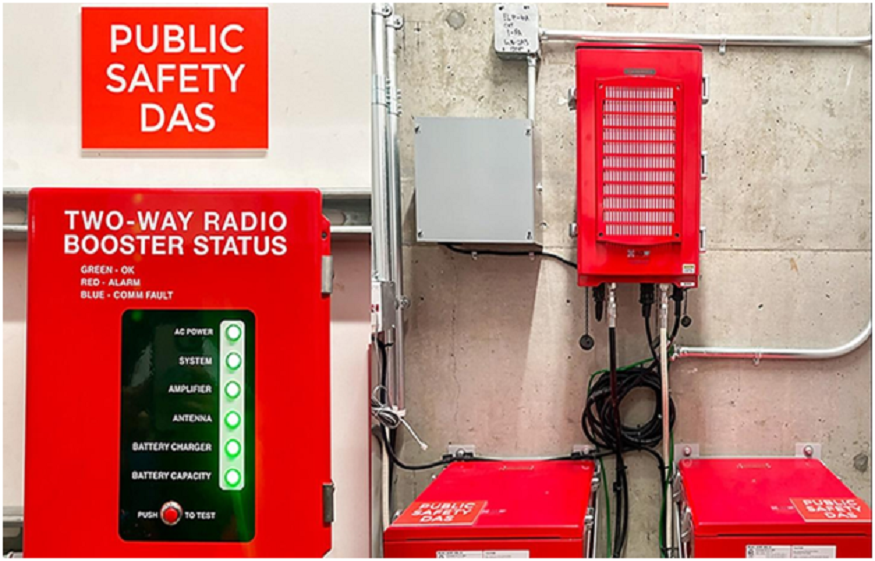
RF grid testing is the moment a public safety coverage plan stops being a promise and becomes a measurable result. Inspectors and AHJs are not guessing whether radios work inside a building. They want proof captured at specific points on a defined grid, with readings that match local pass criteria. In simple terms, the test decides whether an installation is truly ready for a real emergency.
For facility teams, that matters because grid testing affects timelines, occupancy milestones, and how quickly a project can close out. They may have a solid plan on paper, but inspection is about performance in stairwells, corridors, and interior zones where signal loss is common. Understanding how the grid works helps teams prepare early, avoid retests, and keep the process predictable.
What RF Grid Testing Actually Measures inside a Building
RF grid testing measures signal performance across a mapped set of locations, not just the spots that are easy to access. The floor is divided into evenly sized squares, and then test points are selected and documented so results can be repeated. This approach removes the “it works here” problem and replaces it with a consistent method that shows coverage across the full facility.
Read More: How ERP Helps Cement Manufacturers Take Control of Material Planning
The metrics that matter depend on local requirements, but the purpose stays steady. Teams are proving that radios can connect reliably in the spaces first responders will enter. Materials like concrete, steel, and insulated panels create dead zones, and tall shelving can redirect the signal. Grid testing exposes those weak points so adjustments can happen before the inspection date arrives.
How AhJs Decide if Your Public Safety DAS Passes the Grid
Most AHJs judge performance by comparing grid results to minimum thresholds and required coverage percentages. They often put extra attention on stairwells, fire command locations, and responder access routes because those spaces are critical during coordination and rescue. If those areas fail, it can outweigh decent performance elsewhere, especially when the code calls them out as priority zones.
A key factor is whether the public safety DAS system performs consistently across the required test points and required spaces. Consistency is what separates a smooth closeout from a retest. Teams that treat inspection like a surprise quiz often lose time to rework, while teams that plan around the grid, the test method, and the critical areas usually finish with fewer delays.
Why RF Grid Testing Should Guide DAS Design From Day One
Grid testing is often treated like the final step, but its outcome is shaped early. Building plans, wall materials, ceiling heights, and equipment room locations all change how the signal behaves. When teams plan with testing in mind, they can set realistic coverage targets, identify hard areas early, and avoid last-minute antenna moves that collide with other trades and schedules.
That is where DAS system design becomes practical instead of theoretical. A design that accounts for cable loss, antenna spacing, and high-risk zones typically produces cleaner grid results during verification. Their team can also plan for required test areas and coordinate documentation expectations ahead of time, so the inspection is about confirming performance rather than debating how the test was performed.
Common RF Grid Testing Mistakes that Trigger a Retest
One common mistake is testing too early or too late without controlling the environment. If ceilings are open, racks are not installed, or construction staging is still shifting, readings can look better than they will after the building is finished. On the flip side, testing after final occupancy pressure can cause rushed access and incomplete point checks. Either way, results become harder to defend and easier to question.
Another repeat issue is an inconsistent method. Missing points, unclear maps, uncalibrated equipment, or poorly labeled readings can make an inspector doubt the whole package. Teams also get tripped up by critical areas, especially stairwells and enclosed rooms that were not validated during pre-testing. When the process is organized and repeatable, the grid results usually tell a clearer story.
Pre-Testing, Tuning, and the Walk-Through that Saves Retakes
Before the official grid test, many teams run a pre-test walk-through to spot weak areas while changes are still simple. They may check donor signal stability, confirm amplifier settings, validate antenna connections, and do quick checks in known problem zones like stairwells and interior corridors. This is also when labeling, equipment access, and pathway protection get reviewed, so closeout does not turn into a scramble.
A strong pre-test process is usually tied to smart DAS system design decisions. If the layout includes room for adjustment, spare capacity, and accessible pathways, tuning becomes cleaner and safer. Their team can focus on performance and documentation instead of relocating components at the last minute. That difference often shows up in fewer failed points and fewer surprises on test day.
Common RF Grid Testing Mistakes that Trigger a Retest
One common mistake is testing too early or too late without controlling the environment. If ceilings are open, racks are not installed, or construction staging is still shifting, readings can look better than they will after the building is finished. On the flip side, testing after final occupancy pressure can cause rushed access and incomplete point checks. Either way, results become harder to defend and easier to question.
Another repeat issue is an inconsistent method. Missing points, unclear maps, uncalibrated equipment, or poorly labeled readings can make an inspector doubt the whole package. Teams also get tripped up by critical areas, especially stairwells and enclosed rooms that were not validated during pre-testing. When the process is organized and repeatable, the grid results usually tell a clearer story.
How Reporting and Documentation Affect Inspection Outcomes
Passing readings matter, but the documentation package is often what keeps a pass from turning into a retest. AHJs may expect floor plans with grid overlays, numbered test points, equipment calibration details, and summaries by area. When the report is organized, it gives the inspector confidence that the results were gathered fairly and can be verified later if needed.
Read More: 10 Tools Every Revops Agency Should Use
Documentation also supports long-term compliance, especially after remodels or expansions. A public safety DAS system is usually expected to remain testable and consistent over time. If teams keep as-built drawings, baseline test data, and maintenance records, they can respond faster when an AHJ requests re-verification. That preparation also helps when building changes create new weak zones that need attention.
Conclusion
RF grid testing determines pass or fail because it turns coverage into repeatable proof. It shows where the signal is strong, where it weakens, and whether priority areas meet local requirements. When facility teams treat grid testing as a project driver, not an afterthought, they reduce inspection stress, shorten closeout time, and improve responder communication where it matters most.
CMC communications can help teams approach grid testing with a clear process, from planning and coordination through reporting and verification. Their team focuses on predictable results and inspection-ready documentation, so performance aligns with AHJ expectations and the realities of the building environment.
Frequently Asked Questions
Question: What is RF grid testing in a public safety DAS inspection?
Answer: RF grid testing is a structured way to measure radio coverage across a building using defined test points. Teams collect readings at those locations to confirm whether required areas meet local thresholds. It is designed to be repeatable, not a spot check. Inspectors rely on the results and documentation to determine whether coverage is acceptable for first responders.
Question: Who sets the pass or fail requirements for grid testing?
Answer: The Authority Having Jurisdiction, often the fire marshal or inspector, typically defines the required coverage levels and the areas that must meet them. Requirements can vary by jurisdiction. Teams that confirm the grid method, critical areas, and report format early tend to avoid disputes later because expectations are documented before final testing begins.
Question: What areas are usually considered critical during testing?
Answer: Critical areas often include stairwells, fire command or control locations, emergency responder access routes, and interior corridors used during incidents. Some facilities also include electrical rooms, enclosed utility spaces, and higher-risk production areas. The exact list depends on the AHJ. Because these zones may require higher reliability, failure there can trigger a retest.
Question: Why do some systems fail even when coverage seems fine day to day?
Answer: Casual checks can miss narrow dead zones that only appear when testing is systematic. Building materials, racking, and equipment can create pockets where the signal drops, even if most areas feel fine. In other cases, documentation gaps or equipment calibration issues cause an otherwise solid result to be questioned during inspection, which can lead to retesting.
Question: How can teams reduce the risk of a retest?
Answer: They can align early with the AHJ on the grid method, required areas, and report format. A pre-test walk-through helps find weak zones and tune the system before the official test. Clean documentation matters too, including maps, numbered test points, and equipment details. When teams plan testing as a milestone, inspections tend to run more smoothly.